
Learning from Sand
23 July 2026
3 min read
There is a tendency, when we talk about climate change in gardens, to imagine dramatic solutions.
We picture vast rainwater harvesting systems, complex irrigation networks or entirely new planting palettes imported from distant climates. While these ideas all have their place, some of the most valuable lessons can often be found in gardens that have quietly been doing things differently for decades.
One of those places is York Gate Garden.
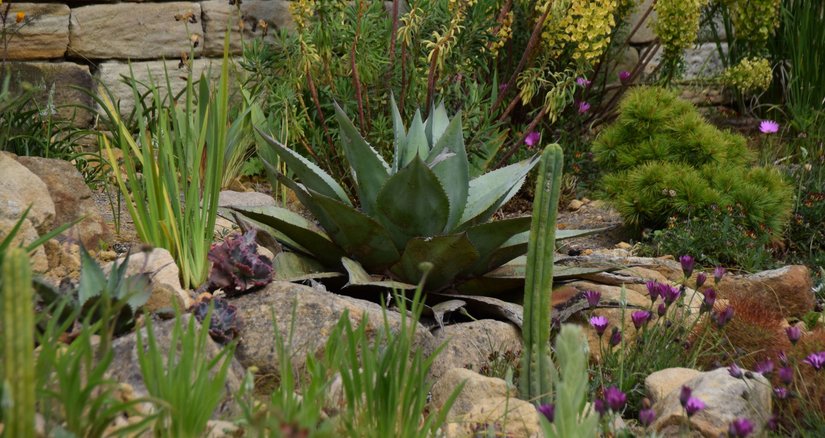
Visitors often remember the beautifully framed views, the intimate garden rooms and the extraordinary sense of enclosure. Yet tucked among these spaces is one area that seems increasingly relevant with every passing summer: the sand garden.
It is easy to overlook at first glance. There are no elaborate engineering solutions or technological innovations. Instead, it relies on something far simpler: understanding how plants naturally grow and giving them the conditions they actually want.
The sandy soil drains quickly, warms rapidly in spring and rarely remains wet for long. It might appear an unlikely place to cultivate beauty, yet it has become one of the garden’s most characterful spaces, filled with plants that have evolved to thrive in precisely these lean conditions.
As our own gardens begin to experience longer dry spells and increasingly unpredictable rainfall, the principles behind this approach feel less like a curiosity and more like a glimpse of the future.
For generations British gardeners have been taught that richer soil is always better. We improve, mulch, feed and water with admirable enthusiasm. Yet many of our favourite Mediterranean and prairie plants actively dislike such generosity. They are adapted to survive where resources are scarce. Rich compost and constant watering often shorten their lives rather than extend them.
The sand garden quietly reminds us that successful gardening is not always about changing the environment to suit the plant. Sometimes the wiser approach is choosing plants that already belong in the conditions we have.
That shift in thinking lies at the heart of climate resilient gardening.
Rather than fighting increasingly hot summers, perhaps we should begin asking which plants remain composed when others wilt. Instead of constantly replacing losses after every dry spell, we might gradually build planting schemes that become more dependable with each passing year.
This is not about abandoning traditional British gardening.
The romance of roses, the abundance of herbaceous borders and the joy of lush spring growth will always have their place. But resilience asks us to broaden our palette. It encourages us to weave drought tolerant perennials alongside familiar favourites, to celebrate silver foliage as much as emerald green, and to appreciate plants that remain beautiful even when rainfall becomes scarce.
Good gardening has always been an exercise in observation.
Gardeners notice where frost lingers longest, where water gathers after heavy rain, and where sunshine arrives first each morning. Climate resilience simply extends that conversation. It asks us to become even more attentive to the character of our own plots.
The future may not be one uniform style of gardening but a patchwork of solutions, each responding to local conditions. Heavy clay gardens will harvest winter rainfall. Gravel gardens will celebrate drought tolerant planting. Woodland gardens will use trees to cool the spaces beneath them. Every garden becomes an expression of its own landscape rather than an attempt to imitate somewhere else.
Perhaps this is why the sand garden at York Gate feels so quietly hopeful.
It demonstrates that adaptation need not feel like compromise. Scarcity can produce elegance. Simplicity can create richness. Plants chosen for the right place often possess a confidence that no amount of watering can ever achieve.
There is another lesson too.
Gardens have always evolved. Every generation has responded to changing fashions, new plants and different challenges. The great gardeners of the past were innovators rather than traditionalists. They experimented constantly, observing what succeeded and what quietly failed.
Climate change simply presents the next chapter in that long history.
As gardeners we cannot control the weather. We cannot guarantee rainfall or prevent heatwaves. But we can design gardens that work with nature instead of against it. We can choose plants with greater care, prepare soils more thoughtfully and value resilience as highly as spectacle.
Standing in the sand garden, surrounded by plants that flourish where many others would struggle, it becomes difficult not to feel optimistic.
Perhaps the future of gardening will not be defined by what we lose, but by what we learn.
If we pay attention to places like York Gate, we may discover that many of tomorrow’s answers have been quietly growing beneath our feet all along.

