
York Gate Garden: When a Garden Changes Its Mind About Beauty
12 October 2026
4 min read
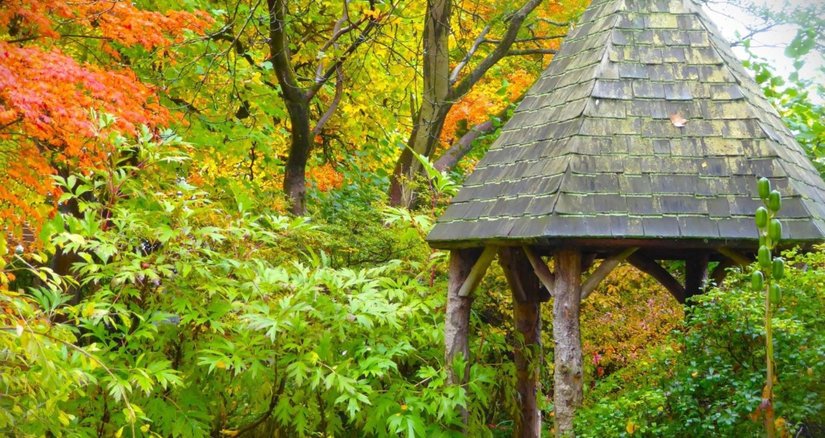
There comes a point in October when York Gate changes its mind about beauty.
The flowers that demanded attention through summer have mostly slipped away, and the garden begins to reveal other things. Seedheads catch the low sun. Grasses become more noticeable with every passing week. The first gaps appear in the borders and, through them, we see walls, hedges and paths that seemed to disappear beneath the generosity of summer. I think this is one of York Gate’s loveliest moments.
There is still plenty of colour, but it is no longer the whole story. Autumn belongs just as much to texture, shape and light. Leaves turn through yellow and ochre into copper and brown. Stems bleach and darken. Berries appear where flowers once were. On damp mornings, cobwebs map themselves between plants that we might otherwise walk straight past. Even familiar corners seem altered. Perhaps that is what I enjoy most about returning to the same garden throughout the year. You begin to understand that there is no definitive version of it. We might remember a particular border in June, or a favourite view at the height of summer, but the garden refuses to remain as we remember it. October takes those same places and rearranges the emphasis.
At York Gate, autumn has a wonderful way of revealing the strength of the design. As the planting recedes, the bones of the garden become clearer. Hedges regain their authority. Paths seem more pronounced. Gates and openings become stronger punctuation marks. Views that were softened by foliage only a few weeks ago sharpen again. And against that order comes the glorious disobedience of autumn. A perennial leans into a path. Seedheads rise above clipped shapes. Leaves gather in corners and beneath benches. Grasses spill into their neighbours. Plants begin to collapse at different speeds, each following its own timetable. I have come to love that contrast.
For years, autumn gardening was presented largely as a matter of clearing up. There was always something to cut back, sweep away or consign to the compost heap. The immaculate winter garden seemed to be one stripped of almost everything that summer had produced. Now I find myself wanting to leave much more standing. Partly that is because we understand more about what those apparently finished plants are doing. Hollow stems offer shelter to insects. Seedheads provide food. Fallen leaves protect the soil and create habitat for the countless creatures living at ground level. A pile of leaves beneath a hedge is not simply something we have failed to clear away. But there is an aesthetic argument for restraint too.
Some plants become more beautiful after flowering. The architecture of a seedhead can be extraordinary, particularly when caught by the first frost or outlined against a pale autumn sky. Grasses take on an entirely different character as their green drains away. Even decay has its colours: tobacco, parchment, rust and bronze. York Gate makes a particularly persuasive case for allowing these things to remain because the garden has enough structure to hold them.
A clipped hedge beside collapsing perennials makes both more interesting. Evergreen foliage seems richer when surrounded by plants moving towards dormancy. Stone, timber and brick become more prominent as leaves fall. The garden does not lose its shape as summer ends; its shape becomes easier to see. There is something here for our own gardens too. We often concentrate on extending the flowering season, which is understandable. Who would willingly give up flowers? But perhaps we should also think about extending the season of interest in other ways. When choosing a plant, I increasingly want to know what happens after it flowers. Does it produce a good seedhead? Will its stems remain standing? Does its foliage colour before it falls? What will it contribute in November, January or even February?
A garden planned only for flowers misses half the year. October also changes the way I move through York Gate. Summer encourages progress. There is always another border in flower, another combination to inspect, another corner pulling you onwards. Autumn makes me linger. The details become smaller. A single leaf caught on the surface of water. A spider's web stretched between two stems. A blackbird turning over leaves beneath a shrub. The polished darkness of a berry. The moment sunlight passes through a yellowing leaf and makes it appear almost stained glass.
None of these things announces itself. You have to be there long enough to notice.
Perhaps that is why autumn feels especially suited to a garden we know well. Familiarity changes the way we look. Instead of asking what there is to see, we notice what has changed since last time. The tree beginning to turn. The border opening up. The seedheads that have survived another week of wind and rain. There is pleasure in recognising those changes because they remind us that a garden is never a finished composition. It is something happening. Soon enough, more leaves will fall. The borders will retreat further and winter will redraw York Gate again. There will be frosts that pick out every stem and hedge, and mornings when the garden seems reduced to line, texture and shadow.
But October sits beautifully between abundance and absence.
Enough of summer remains for us to remember where we have come from, while the structure of winter is beginning to appear underneath. And on those autumn days when the sun drops low across York Gate and catches the grasses, seedheads and turning leaves, it is difficult to imagine wanting the garden to be anything other than exactly where it is in the year.

Ways we help
Free, confidential support for everyone working in horticulture. Get expert help with your finances, health, career, or life's challenges.

Support Us
Your support helps Perennial provide advice, resources, and practical assistance to those who need it most.

Perennials Gardens
Visit our stunning gardens, explore seasonal events, and help fund vital support for the horticultural community.