
Growing Together: Children, Gardens and the Healing Power of Nature
28 May 2026
4 min read
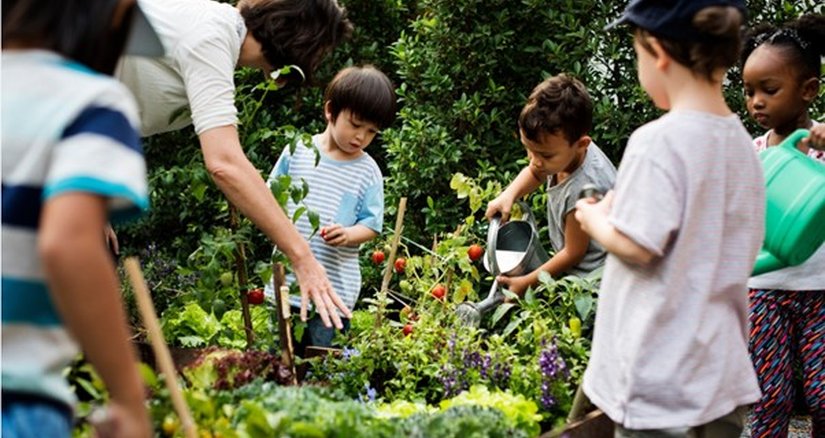
There is something wonderfully hopeful about children in gardens. Perhaps it is because children instinctively understand what many adults forget, that a garden is not simply a place of maintenance or display, but somewhere alive with possibility. A garden is a place for discovery. For muddy hands and pockets full of seedpods. For moments of stillness beneath trees and sudden excitement at the sight of a frog slipping into water.
During National Children’s Gardening Week, these small moments matter more than ever.
At Perennial, the belief that gardens can change lives sits at the heart of everything we do. Whether supporting people working in horticulture through hardship, protecting wellbeing, or caring for two beautiful gardens, Perennial understands something essential: gardens are ultimately about people.
Nowhere is that more evident than at York Gate, Though modest in scale compared with some of Britain’s grand landscapes, York Gate possesses something far more intimate and affecting. It feels deeply human. Every winding path, clipped hedge and carefully framed view invites curiosity and reflection.
And children respond to that instinctively.
Unlike formal spaces that seem designed to keep life neatly at arm’s length, York Gate draws you inward. The garden unfolds as a series of rooms, each with its own atmosphere and character. One moment you are enclosed within cool green shade; the next you emerge into warm borders alive with colour and bees. There are hidden corners, narrow pathways and glimpses of water that seem almost secret.
To a child, this is irresistible.
Children do not need vast gardens or expensive features to engage with nature. In truth, the simplest elements are often the most meaningful. A weathered path disappearing beneath foliage. A patch of long grass alive with insects. The earthy smell after rain. These are the things that awaken imagination.
At York Gate, there is a sense of gentle discovery everywhere. You can almost feel the garden encouraging you to slow down and look closely. It reminds us that gardening is not about perfection. It is about attentiveness.
That lesson feels increasingly important today.
Modern childhood is often hurried and heavily structured. So much time is spent indoors, mediated through screens and schedules, that opportunities for unstructured contact with nature have quietly diminished. Yet gardens offer children something increasingly rare, the chance to observe life unfolding at its own pace.
A seed germinates slowly. A robin builds a nest twig by twig. Leaves decay into soil over months, not moments. Gardening teaches patience because nature refuses to hurry for us.
For children especially, this is invaluable.
Anyone who has watched a child sow a sunflower seed will recognise the quiet wonder involved. The seed disappears into dark soil and for days there is nothing. Then, seemingly overnight, a small green shoot appears. To adults, perhaps, this feels familiar. To children, it feels miraculous.
They also teach care and responsibility in the gentlest possible way. A child watering seedlings begins to understand that living things depend upon attention. Watching pollinators visit flowers introduces them to the wider web of life. Even small acts — deadheading marigolds or harvesting peas — foster connection and confidence. These experiences stay with us far longer than we realise.
Many adults can trace their love of gardening back to childhood memories: digging alongside a grandparent, growing runner beans at school, or picking strawberries warm from the sun. The emotional power of those memories lies not simply in the plants themselves, but in the feeling attached to them — safety, curiosity, comfort and belonging. Gardens become part of our emotional landscape.
This understanding sits naturally alongside Perennial’s work supporting people across horticulture. Behind every beautiful garden are the hands that maintain it, gardeners, grounds staff, nursery workers, landscapers and designers whose work is often physically demanding and rarely celebrated enough. Perennial exists to support those people through illness, bereavement, financial hardship and difficult periods in life.
There is something deeply moving in that idea: that the people who spend their lives nurturing landscapes are themselves nurtured in return.
At York Gate, you sense this continuity of care everywhere. The garden feels loved, not manufactured. It carries the atmosphere of a place tended thoughtfully over time rather than imposed upon the landscape all at once. Perhaps that is why it feels so welcoming to families and children. There is warmth there, and generosity.
National Children’s Gardening Week is therefore about far more than encouraging children to plant seeds, though that is certainly part of it. It is about helping young people develop a relationship with the natural world — one rooted in curiosity, care and belonging. That relationship matters profoundly for the future.
Children who garden often become adults who notice. Adults who care about wildlife, seasons and landscapes. Adults who understand, instinctively, that the natural world is not separate from us but something we are deeply connected to.
And perhaps gardens offer adults something equally important too.
In many ways, that is the spirit shared by both York Gate and Perennial itself, the belief that care, patience and connection matter deeply. Gardens remind us of this every day if we are willing to notice.
And perhaps that is where a lifelong love of gardening truly begins: not with expertise or ambition, but with wonder.
- Andrew Jackson
@thenewbuildmanifesto

