
The Serendipitous Bloom of Phlox ‘Burgi’
29 May 2026
3 min read
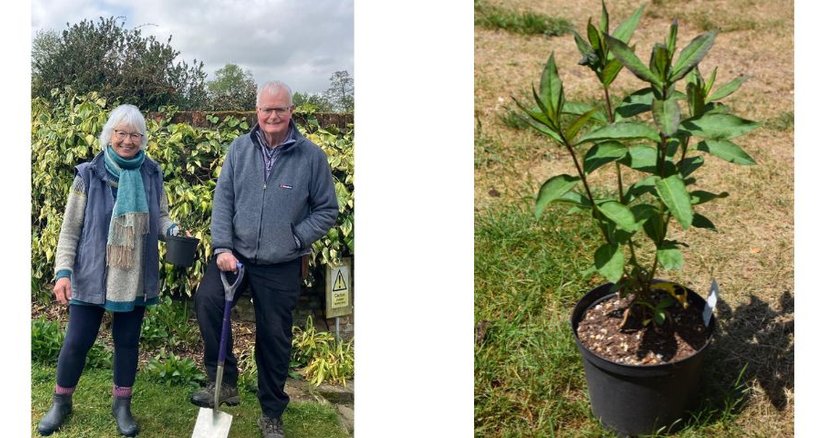
Some plants carry more than beauty; they carry history, memory, and unexpected connections across generations. Phlox ‘Burgi’ is one such plant, and thanks to the dedication of our volunteers at Fullers Mill Garden, this rare and remarkable variety is once again finding its place here.
Bernard Tickner’s gardening style and plant choices were greatly influenced by the late Christopher Lloyd of Great Dixter. Bernard admired Lloyd’s famously forthright approach to gardening and devoured his books, describing him as “nicely opinionated”. Bernard and his wife Bess corresponded with Christopher, visited Great Dixter many times, and often returned to Fullers Mill with treasured plants to enrich their own garden.
That connection has now come full circle in the most unexpected way.
In January 2018, Stephen Burgess joined our growing team of garden volunteers. Beginning in one of the toughest months of the gardening year, Stephen soon discovered the rewards of watching the garden awaken through the seasons – something he still delights in eight years later. He particularly values working alongside like-minded gardeners, sharing stories and knowledge, and admiring the exceptional quality of planting throughout the garden.
In 2024, Stephen mentioned that he had a Phlox named after his grandfather growing in his own garden. It had struggled for some time, but after being moved to a better position, it had begun to thrive.
At the same time, fellow volunteer Diane happened to visit Great Dixter and purchased the last plant of Phlox ‘Burgi’ available in their nursery that day.
Then Stephen made a chance discovery that revealed the remarkable history behind this plant and how it connected his family and Christopher Lloyd.
He came across an extract from an article Christopher Lloyd wrote for The Guardian in August 2003:
“I have a light purple one which I call Phlox ‘Burgi’ because it came from the family of Burgess, ma, pa and daughter. It starts in late June and continues virtually non-stop into October.”
Stephen explains:
“The Burgess family Christopher refers to were my grandfather, grandmother and aunt, who lived in Wye, Kent.
“My grandfather, A.H. Burgess, joined Wye Agricultural College after the First World War and became Head of the Department of Hop Research.
“After the Second World War, Christopher Lloyd studied at Wye College and stayed on as an assistant lecturer in horticulture until 1954. He became friends with my grandparents and aunt and would have visited their home in Wye in the early 1950s. It must have been there that he first encountered the Phlox and later chose to name it ‘Burgi’.
“In 1954, he established his specialist nursery for unusual plants at Great Dixter, his family home, and Phlox ‘Burgi’ flourishes there to this day.”
Now, in 2026, thanks to Diane’s quick thinking we have successfully propagated a small stock of Phlox ‘Burgi’ here at Fullers Mill. These plants will not only be added to the garden itself but will also be available for sale through our nursery, allowing this historic variety to be shared more widely.
And what a plant it is.
True to Christopher Lloyd’s description, it is beautifully scented and flowers for an exceptionally long period. The foliage emerges in early spring with striking burgundy tones before maturing to deep green. The flowers are a rich violet-purple with delicate white markings at the centre. It forms an elegant clump, reaching around 1 metre in height and 60cm across. We have also found it to be notably resistant to mildew.
It thrives best in moisture-retentive but well-drained soil, in full sun or partial shade, and makes an excellent cut flower.
The RHS currently lists only one supplier of Phlox ‘Burgi’ - Great Dixter - making its return to Fullers Mill especially significant.
This is more than just a beautiful Phlox. It is a living link between Christopher Lloyd, Great Dixter, the Burgess family, and Fullers Mill itself – a wonderful reminder of how plants, people and gardens remain connected across time.
A rare plant. A remarkable story. And a true volunteer success.